




Recently the keyword “264.68.111.161” has begun appearing in searches and has become a subject of technical conversations in the form of “what’s the meaning of 264.68.111.161? Moreover, whether it is a valid IP address or not has also been raised as an essential question by many computer users,”
Firstly, 264.68.1111.161 appears to be a normal IPv4 address. It consists of four octets divided into groups by dots. But, on further observation, this IP raises alarms to network administrators and cybersecurity specialists. There are several reasons due to which this IP address can be identified as suspicious. Firstly, IPv4 IP addresses are divided into four
In this article, you will get a full, detailed description of 264.68.1111.161, its popularity in searching, its presence in any place, its validity, and how you should act in case you come across it in the log records, software settings, or security warnings. No matter whether you are a beginner with curiosity in IP addresses or an experienced user facing some problems in networking.
Understanding IP Addresses: A Quick Overview
Though 264.68.111.161 seems to be a valid IP address, it is actually invalid and cannot ever exist in the internet. Its appearance is mostly linked with typos, software flaws, and security issues.
To comprehend the value of 264.68.1111.161, it is essential to comprehend the nature of an IP
An IP Address, which stands for Internet Protocol Address, is an identification number for computers that are connected to a network. Its main function is to identify computers and help them communicate with each other.
IPv4 Format Basics
IPv4 addresses consist of:
-
Four numbers (called octets)
-
Each octet ranges from 0 to 255
-
Example:
192.168.1.1
Each octet is stored as an 8-bit value, which mathematically limits the maximum number to 255.
Is 264.68.111.161 a Valid IP Address?
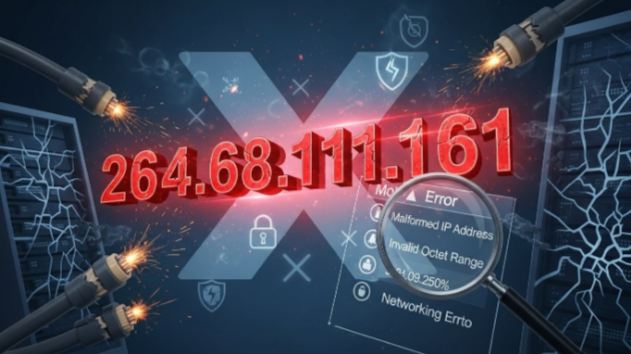
No, 264.68.111.161 is not a valid IPv4 address.
Why 264.68.111.161 Is Invalid
The problem lies in the first octet:
-
Valid range per octet: 0–255
-
First octet in 264.68.111.161: 264
-
264 exceeds the maximum allowed value
Because of this, 264.68.1111.161 cannot exist on the public internet, cannot be assigned to a device, and cannot be routed by standard networking equipment.
Why Does 264.68.111.161 Appear in Searches and Logs?
Despite being invalid, 264.68.111.161 shows up surprisingly often. Here’s why.
1. Typographical Errors
One of the most common reasons is simple human error. Users may intend to type:
-
264instead of264 -
164or244mistakenly replaced
Even a single digit error can create an invalid address like 264.68.111.161.
2. Software Bugs and Misconfigurations
Certain applications or scripts may generate malformed IP addresses due to:
-
Poor input validation
-
Faulty parsing logic
-
Incorrect subnet calculations
When this happens, values like 264.68.111.161 can appear in logs or configuration files.
3. Placeholder or Dummy Data
In some environments, developers intentionally use invalid IPs like 264.68.111.161 as placeholders to:
-
Prevent accidental real connections
-
Flag test data
-
Trigger validation errors
4. Malicious or Suspicious Activity
Cybersecurity tools sometimes flag unusual IP patterns. Invalid addresses like 264.68.111.161 may appear during:
-
Port scanning attempts
-
Bot misbehavior
-
Injection attacks
-
Log spoofing
SEO and Search Intent Behind 264.68.111.161
From an SEO perspective, 264.68.111.161 is a classic example of a low-competition, curiosity-driven keyword.
Users searching for it are typically looking for:
-
“What is 264.68.1111.161?”
-
“Is 264.68.1111.161 a real IP?”
-
“Why does 264.68.1111.161 appear in my logs?”
-
“264.68.1111.161 error meaning”
This makes it a perfect keyword for:
-
Educational content
-
Troubleshooting guides
-
Cybersecurity blogs
-
Network diagnostics articles
Common Errors Related to 264.68.111.161
When 264.68.1111.161 appears, it often triggers system errors.
Typical Error Messages
-
“Invalid IP address format”
-
“IP address out of range”
-
“Cannot bind to address 264.68.1111.161”
-
“Malformed IPv4 address detected”
These errors occur because operating systems and routers strictly enforce IPv4 rules.
How Systems Handle Invalid IP Addresses Like 264.68.111.161
Operating Systems
Modern operating systems such as:
-
Windows
-
Linux
-
macOS
will immediately reject 264.68.1111.161 during:
-
Network configuration
-
Firewall rule creation
-
Application binding
Routers and Firewalls
Networking hardware will not route traffic to or from 264.68.111.161. It is dropped instantly because it does not exist in the IPv4 address space.
Cybersecurity Implications of 264.68.111.161
Although 264.68.1111.161 is invalid, its presence can still signal important security insights.
1. Log Tampering
Attackers may inject fake IP addresses like 264.68.1111.161 into logs to:
-
Obfuscate real activity
-
Break log parsers
-
Avoid attribution
2. Bot or Script Errors
Automated bots sometimes generate malformed IPs due to programming errors. Seeing 264.68.111.161 repeatedly could indicate:
-
Broken scraping tools
-
Malicious scripts
-
Poorly coded malware
3. Validation Bypass Attempts
Some attackers test systems using invalid values like 264.68.1111.161 to identify weak input validation.
How to Fix Issues Related to 264.68.111.161
If you encounter 264.68.1111.161, here’s how to handle it.
Step 1: Validate Input Sources
Check:
-
User input forms
-
API payloads
-
Log ingestion pipelines
Ensure IP validation restricts octets to 0–255.
Step 2: Review Configuration Files
Search for 264.68.1111.161 in:
-
.conffiles -
.envvariables -
YAML or JSON configs
Replace it with a valid IP or remove it entirely.
Step 3: Strengthen Input Validation
Use strict regex or built-in IP validation libraries instead of custom logic.
Step 4: Monitor for Repeated Occurrences
Frequent appearances of 264.68.1111.161 may indicate:
-
Automated misuse
-
Systematic errors
-
Security probing
IPv4 vs IPv6: Why 264.68.111.161 Still Isn’t Valid
Some users wonder if 264.68.1111.161 might be valid under IPv6. The answer is still no.
-
IPv6 uses hexadecimal
-
Format is completely different
-
Example:
2001:0db8:85a3::8a2e:0370:7334
264.68.111.161 does not conform to IPv6 either.
Educational Value of 264.68.111.161
Interestingly, 264.68.1111.161 is often used in teaching environments to:
-
Demonstrate IP validation rules
-
Teach common networking mistakes
-
Show why octet limits matter
Can 264.68.111.161 Ever Become Valid?
Under the current IPv4 standard:
-
No
-
The 0–255 limit is fundamental
-
Changing it would break the entire internet
Even with IPv6 adoption, 264.68.1111.161 will never be valid in its current format.
Frequently Asked Questions About 264.68.111.161
Is 264.68.111.161 dangerous?
No, by itself it is not dangerous. However, repeated appearances could indicate misconfiguration or malicious activity.
Can I ping 264.68.111.161?
No. The request will fail immediately because the address is invalid.
Why do hackers use fake IPs like 264.68.111.161?
Sometimes to test systems, sometimes due to errors, and sometimes to disrupt log analysis.
Should I block 264.68.111.161?
Blocking is unnecessary because it cannot route traffic. Focus on fixing validation instead.
SEO Advantages of Targeting 264.68.111.161
From an SEO standpoint, 264.68.1111.161 offers:
-
Very low competition
-
Clear informational intent
-
High relevance for technical audiences
-
Long-tail keyword opportunities
Including it naturally throughout an article—like this one—helps capture niche traffic while providing real value.
Final Thoughts on 264.68.111.161
Although the IP address appears to be a valid IP address, it is technically invalid and cannot co-exist in the internet environment. The IP address generally indicates typographical errors in IP addressing, programming flaws in tools like OpNetView, dummy data entries in databases, and
But understanding why and how to respond to 264.68.111.161 could help increase the dependability and security methods, and remove mistakes within configurations. What appears to be an unusual version for developers, system administrators, and curious learners would be an outstanding indicator of the preciseness of the internet protocols.